One of our reasons for going with a skoolie vs getting a nice Class A RV is the ability to keep the whole family together on travel days. Yes, some Class A RVs have seating for passengers, however, they are not well regulated and are often added as an afterthought. Additionally, there is usually not a wall between the driving compartment and the living area, turning your rack of McCormick’s finest into lethal projectiles in the event of a sudden unscheduled stop (crash), or even just a sudden stop or turn.

Coriander, Cumin, Cinnamon
All that said, it would be horribly inconvenient (and expensive) to take the bus into the city to get groceries once a week, and it would defeat the reason for having passenger seating if we had the bus and a chaser vehicle. The only option would be to tow a shuttle vehicle behind the bus. These are often called Toads in the RV community as a short and cute form of a towed vehicle.
When it comes to selecting your toad, it’s important to think about the different ways to tow. The main three are trailer towing, dolly towing, and flat towing. The names are all pretty indicative of how they work.
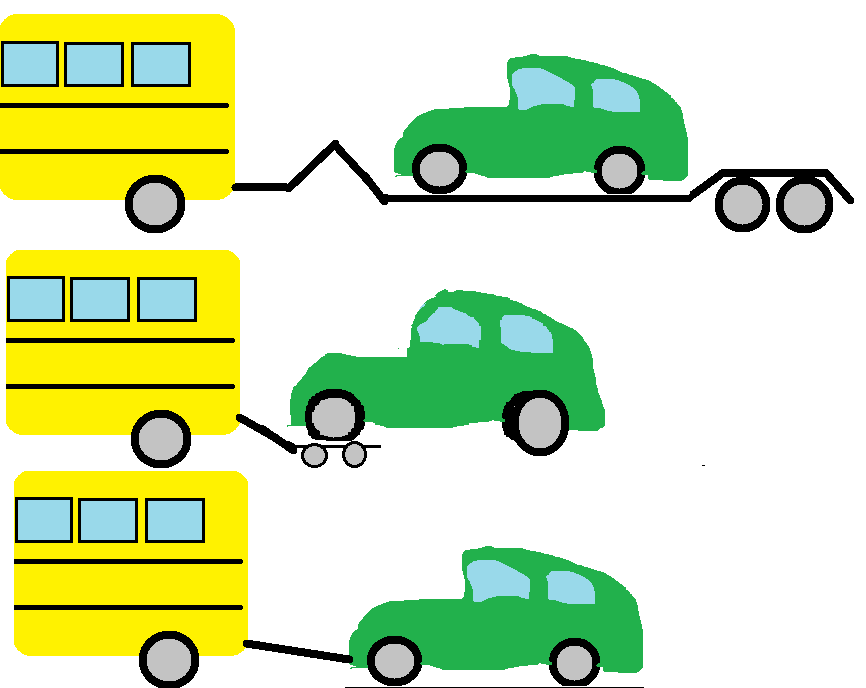
Trailer towing:
Suitable for any vehicle as the towed vehicle’s components are never in motion while moving. Brakes and lights are handled by the trailer. Requires a trailer which is expensive and hard to store when not in use. Loading and unloading can be difficult.
Dolly towing:
Suitable for FWD vehicles, or RWD if towing them backward. Essentially you are raising the powered wheels off the ground to prevent the transmission from overheating. Requires a dolly which can be expensive, heavy, and hard to store when not in use. Make sure you check with your toad’s manufacturer first, as not all cars can be towed this way.
Flat towing:
Suitable for most manual transmissions and some automatics depending on the manufacturer. Requires some extensive modifications to be made to the towed vehicle, including a base plate for the tow bars to connect to, supplemental wiring to tie the toad’s light system to the towing vehicles, and a supplemental braking system. However, it’s easy to set up when you are ready to tow; just attach to tow bars, plug in the wires and you’re ready to go. You only need to store the tow bars when not in use.
Looking at all these factors, we chose to go with a vehicle that could be easily flat towed. Sadly my 2006 Toyota Prius didn’t fit that description; in fact, the owner’s manual specifically said no.

We looked into the market, specifically for vehicles that were flat tow-able and selected a beautiful 2019 Ford Fiesta with a manual transmission.

We purchased all the parts needed to flat tow the Fiesta through etrailer.com. I’ve got a lot of work ahead of me but I’ll keep you up to date on my progress. Wish me luck.
