
As I’ve written before our family is going from a house to a Skoolie, so I’ve decided to start writing an in-depth series about what a skoolie is, how they work, and chronicle our transition. Timeline view.
What is a Skoolie?
In short, a Skoolie is a retired bus. Often times a school bus, but sometimes tour or transit buses are used too. The bus gains a new life as an RV, converted by the new owners over the course of several months to years, depending on budget, and time available to work on the project.


I want a Skoolie, what should I do?


Step one should be to ask yourself what kind of bus you want. Buses come in several different configurations and they all have advantages and disadvantages. Dog-nosed or flat-faced, front or rear engine, all have unique challenges.
Dog nosed Skoolie
Dog-nosed buses have the advantage of easy access to the engine bay, as it’s right out there in front, however, what you gain in convenience, you lose on internal volume. Also dog nosed buses look more ‘bus-like’ and won’t be allowed in some RV parks, and they’re really loud to drive.
Flat nosed Skoolie
Flat-nosed buses have the advantage of looking more like a class A and have two main configurations: rear engines and front engines.
Front engine buses are typically much louder and hotter as the operator is right next to the big engine. They have a large driveshaft going under the bus reducing possible under-deck storage, and if you need to work on the engine, you’re risking getting grease and grime on all your stuff! Rear-engine buses are much quieter, and cooler, and typically have more under-deck storage options. The big engine in the rear does limit the loading of large items from the back, and the wheelbases are typically longer.
What we chose
We chose to go with the flat-faced rear-engine bus with under-deck storage. A more comfortable ride easier/cleaner access to the engine and lots of storage seemed the best option for us since we plan to move around a lot.
I have a Bus, now what?
Step 2: Make a plan. Where are you going to put your stuff, how many berths do you want? Black tank, or composting potty? Solar or no solar? How many amp-hours of storage? Need a living area? Love to cook? Once you’ve nailed down what kind of bus you want you can start to paint the picture.
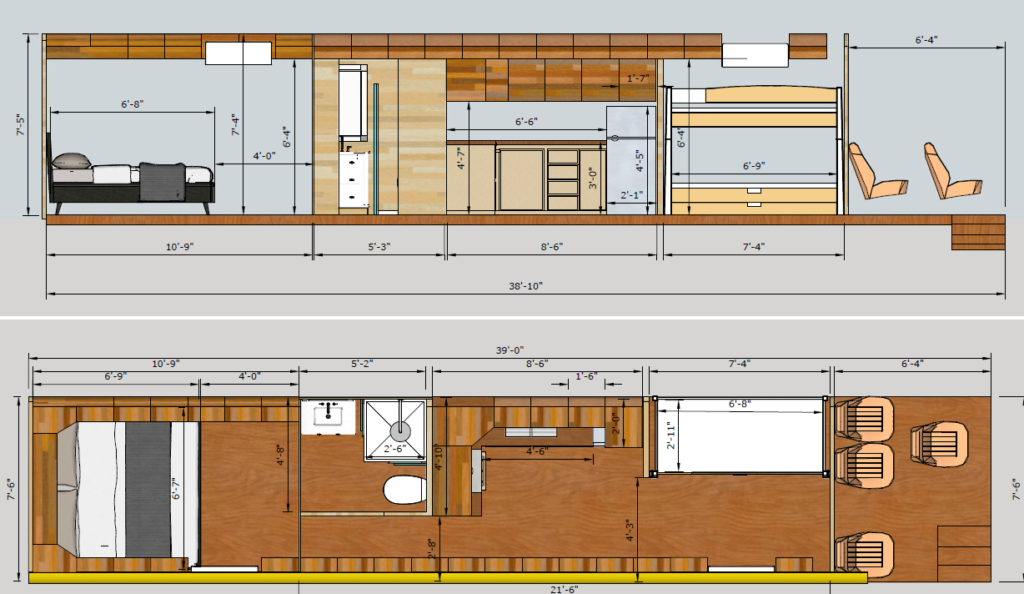
The most important part!
Step 3 should always be ascertaining whether the bus is still sound. You’ll be living in this full time and you don’t want to spend expensive months in hotels as your home has its transmission overhauled. These aren’t pristine off-the-line buses, so take your time evaluating them. Our bus ended up being in the shop for 4 months getting repairs after the builders put in all the work on converting it. While not a deal breaker, if you’re planning to live in the bus as you build it out, as many do, it would be wise the make sure the base vehicle is sound first.
Now that you’ve got a sound bus and a plan, then it’s on to the fun stuff. Gutting, fitting, and shakedown.