
When it comes to survival and comfort on the road one needs to consider three main things; power, water, and waste handling. Power and water are pretty straightforward. Water can be stored in tanks, brought in bottles, or just locally sourced via a hook-up or fill. Power can be more variable; storage in batteries, generation with a generator or solar, or again locally sourced via hookups. Waste on the other end (pun intended) can get messy, let’s talk about your RV Toilet!
This post may contain affiliate links, meaning if you click on it and make a purchase I’ll receive a small commission at no cost to you. As an Amazon Associate, I earn from qualifying purchases. For more information, please check our Privacy Policy and Disclaimers and Disclosures.
Traditionally RVs and campers are equipped with three storage tanks: fresh water, grey water, and black water.

Fresh Water
Fresh water is self-explanatory; it is your portable source of potable water used for everything from cooking and drinking to flushing the toilet. The size of the tank can be a limiting factor when it comes to boondocking. The weight of the water in the tank also needs to be factored in when moving your rig.

Grey Water
Grey water is the cleaner of the two wastewater tanks it is the runoff from the sinks and showers. Some RVs can get away with re-using the contents of this tank to water landscaping or to wash the rig and tow vehicles.

Black Water
This is the stinky one. The black tank collects the waste products from the RV toilet. Black water tanks have to be dumped at designated sites and there is typically a fee to handle it. The tanks also need to be cleaned out from time to time to avoid the dreaded poo pyramid where the solid waste builds up in the tank and needs to be broken up with a special pressure washer attachment that is just as disgusting as it sounds. This can be mitigated with bacteria and enzymes that break down the toilet paper and solid waste and move your rig often to mix the contents. However when you’re parked for weeks at a time that doesn’t really help. All this unsavory stuff can be avoided by changing your thoughts on what you do with your doo!
Dry toilets! Another way to go!
What if I told you there were RV toilets out there that didn’t require water to safely and in a sanitary manner handle one’s waste? Dry composting toilets, dry toilets, and composting toilets all are in the same family. How they work is by separating the wet waste (urine) from the solid waste (poop). Doing so allows the solids to quickly dry and break down. Leaving a pathologically inert, but biologically fertile end product.
There are two types of dry RV toilets; macerating and static. Both depend on rapidly drying the solids so as to reduce smell and assist with eventual decomposition. Macerating RV toilets have a set of blades or paddles that will mix the latest deposit with a media, usually peat moss, coconut coir, or sawdust. A static toilet doesn’t have those blades, or a need for media, though some users will add a bit with each use. Both toilets require a powered fan to pull fresh air in and push exhaust air out to facilitate the drying, typically a small fan similar to those in computers, and requires a minuscule amount of power to run.


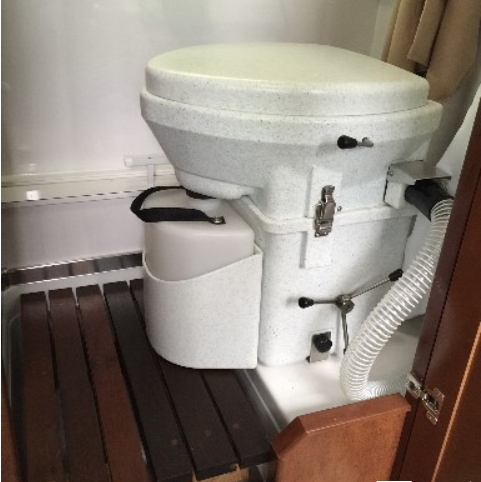
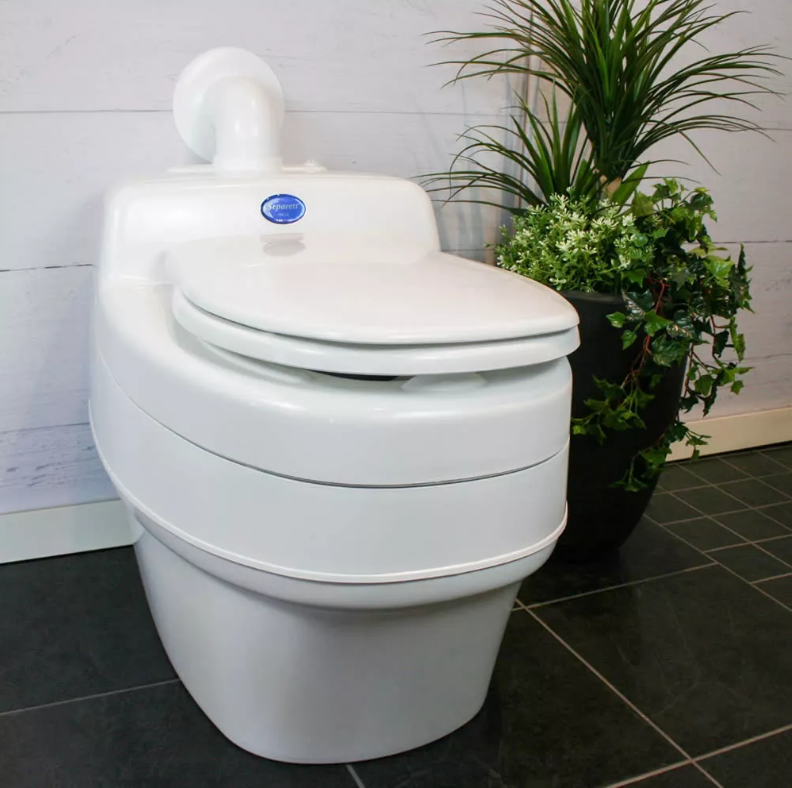
https://separett.com/en/
Both types need to have the urine diverted away from the solids, adding a bit of complexity to the process. Urine can be diverted to a separate holding tank or jug. Some rigs will have it routed to the grey tank. There, urine will be diluted with the rest of the grey water.
Maintaining your composting RV toilet
It’s very important to rinse out and flush the urine lines between uses to prevent crystallization of the salts from clogging the lines, but this is easily done with a small spray bottle of diluted white vinegar.
Other than the blades there is one other difference between macerating and static toilets. How to remove the waste when it’s full!
Static
Static toilets have a bin or bucket, lined with a compostable bag, and simply need to have the bag changed when it’s full.
Macerating
Macerating blade mechanisms make bags or liners impossible and often the whole toilet needs to be removed and dumped into a proper container, be it an established compost pile or bin, or into a garbage bag for eventual disposal.
What to do with the poo?
Disposing of compostable bags is super easy, either drop them in an established compost bin or throw them in the trash. It’s no worse than throwing away disposable diapers. If throwing your waste in the trash, double bag it for safety. Disposing of the urine is as easy as watering the surrounding trees and shrubs, just don’t play favorites, and be sure to dump your container near the base of the plants. Undiluted urine contains a lot of nitrogen and can be harmful if applied too often to a single plant, and the uric acid will burn the leaves. Be sure to check local laws first; this isn’t always legal.
While these are called composting toilets, the product that you pull out can’t be put right in your vegetable garden. The process of composting takes a full year or more to fully break down the biomatter into a form that plants can readily access and is free of harmful pathogens. Furthermore, the process is a little quicker with macerating toilets, but the limit still applies.
Let’s look at the pros
Wet Toilet
- Traditional
- Standard equipment
- Close to the same as residential toilets
- No extra consumables to carry
Dry toilet
- Lightweight
- No black tank issues
- Possibly no ‘stinky slinky’ to store and maintain
- Can be easier on the environment
- Waste doesn’t need municipal waste treatment
- No black tank; more space for freshwater tanks
And the cons…
Wet Toilet
- Emptying the black tank often costs a fee
- Containment issues are messy and hazardous
- The black tank needs to be cleaned out periodically
- Black tank eats up storage and weight capacity
- Costly to replace if damaged and involves plumbing.
Dry toilet
- Some units require a consumable media
- Require 24/7 power when in use
- Require emptying every few days to weeks
- Urine may need to be emptied daily
- Boys need to sit to use the urine separator
- Women need to be conscious of their “aim”
- Some units need to be hauled outside to dump
- Urine diverters can get clogged if unmaintained.
In the end, we chose to set our bus up with a Separett Villa dry toilet. With the urine diverter routed to the grey tank. We think this will strike the best balance of ease of use and environmental consciousness. Furthermore, the Nature’s Head toilet got vetoed because we found it was designed for use by 1 to 2 individuals. With a family of four, we didn’t fancy having to take it outside every couple of days to dump and clean out. We’ll keep you up to date as we break in the bus and share our growing pains and victory stories.